Every job here happened on a real car in a real driveway, parking lot, or dealer lot. Some were simple. Some were the kind of damage another shop wrote off. Text a photo of yours and find out which kind it is.
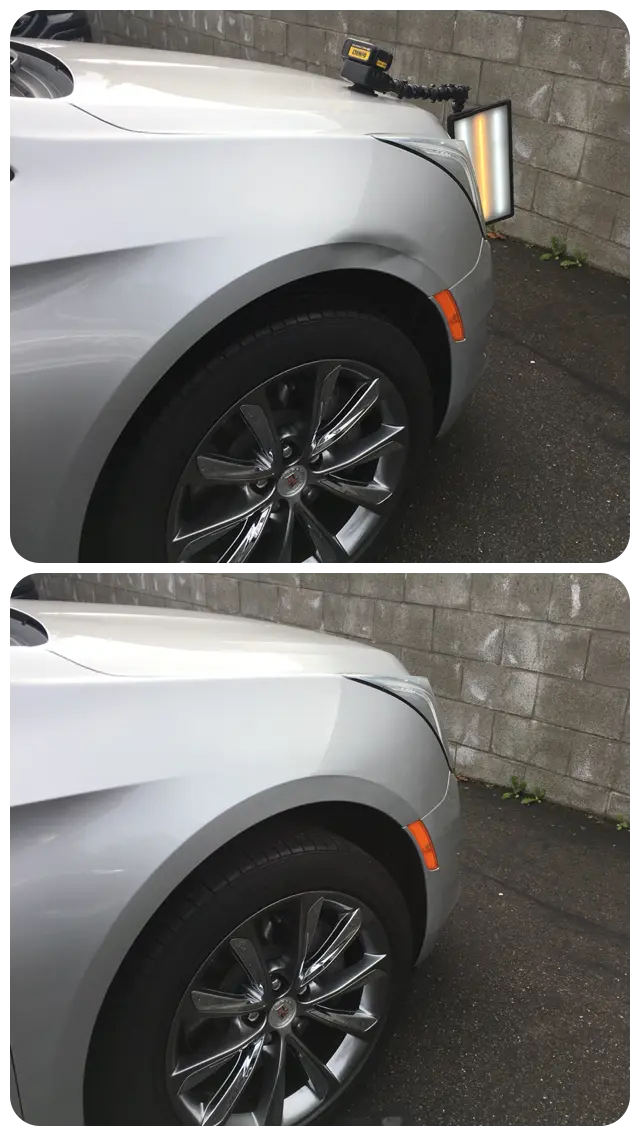
A silver Lexus SUV traded in at a local dealership because the owner didn't want to live with the damage anymore. Silver is one of the hardest colors in the business to color-match, and a repaint would have meant explaining to the next buyer why one panel didn't quite match the rest of the factory finish, the kind of thing that tanks resale value on a car in this price range.
The used car manager picked it up at a steep discount because of it. If the owner had gotten a paintless dent repair assessment before trading it in, the conversation, and the number, might have looked very different.
The dent itself was deep, right on the edge of too-stretched-to-save, but it came back clean: full save, no repaint, no explaining anything to anybody.
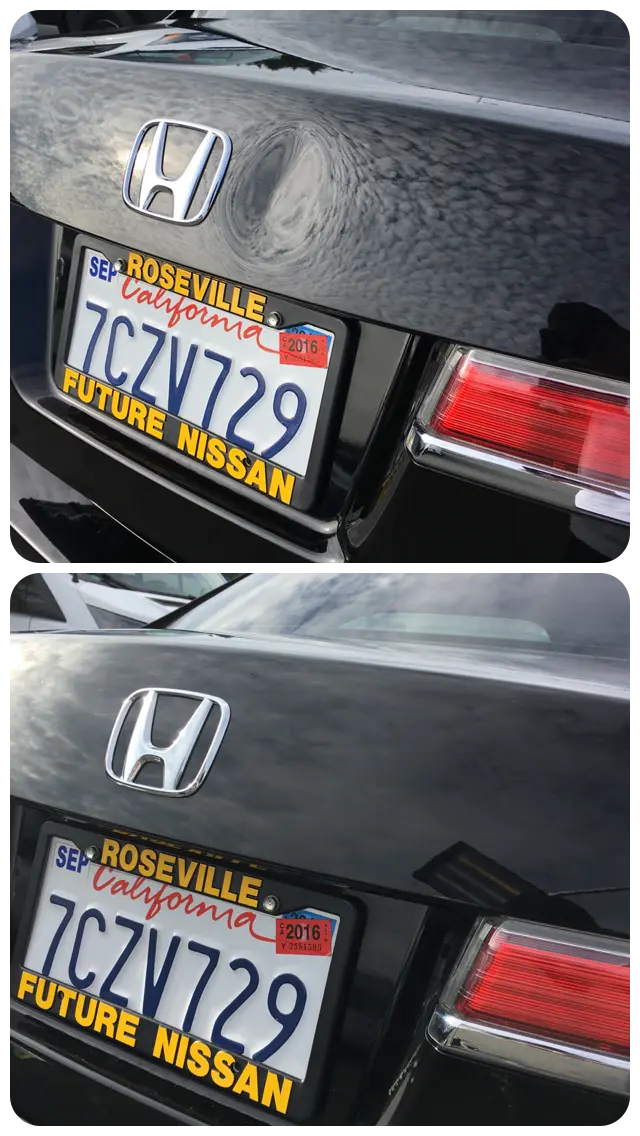
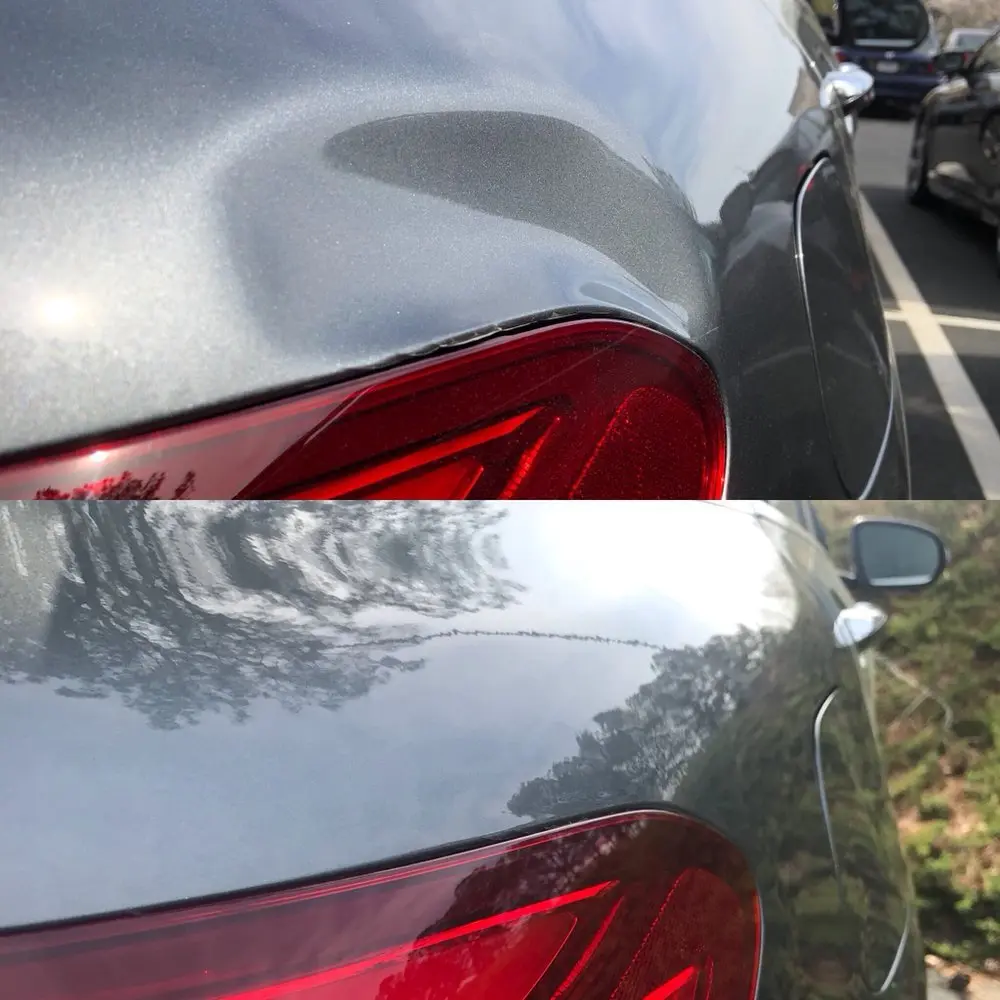
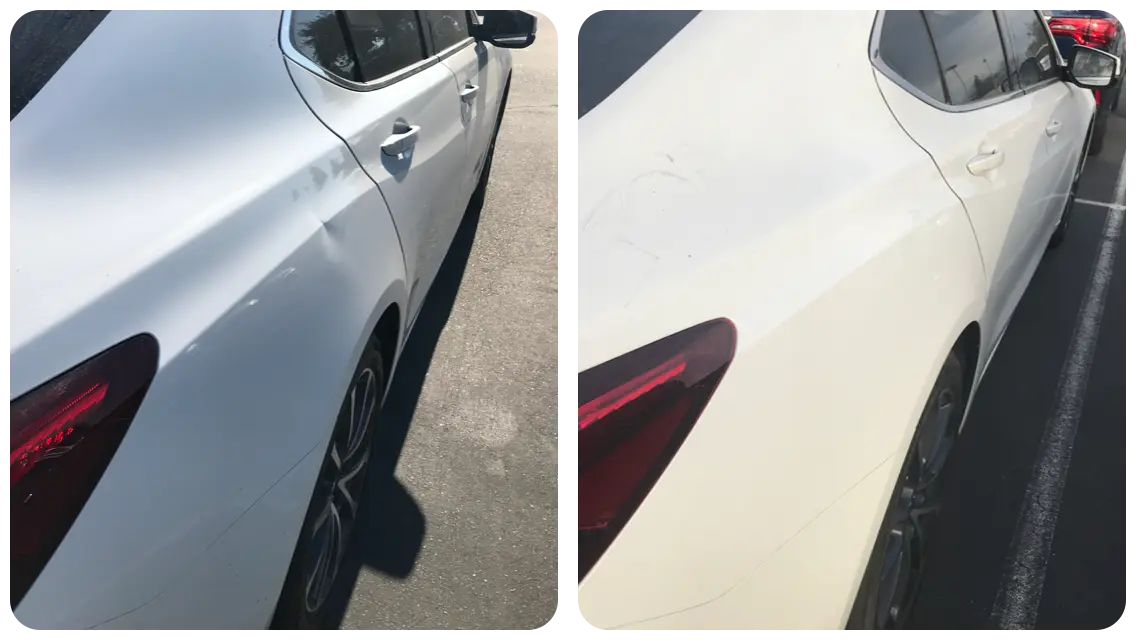
This Honda owner stopped by for a quick repair and left happy.

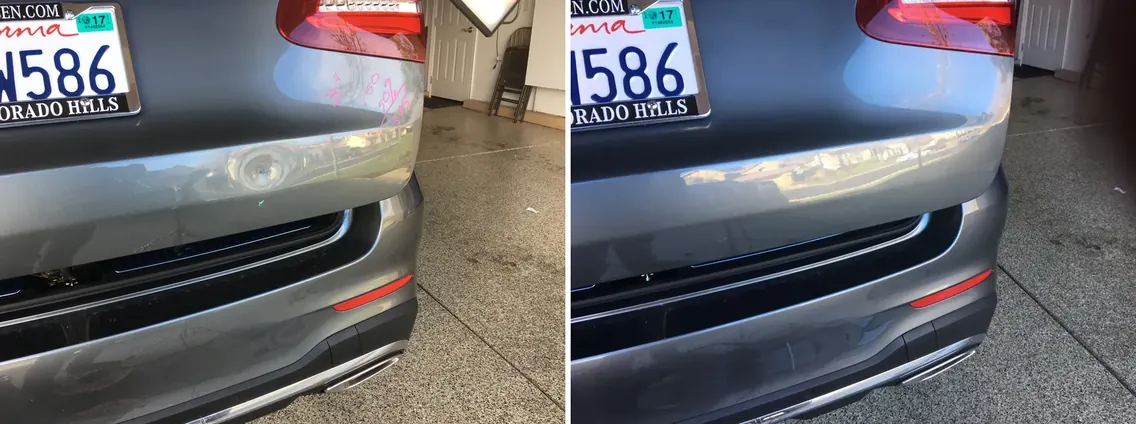
A Porsche backed into a propane grill at a cookout. Taillight broken, panel dented. One visit, handled.

A body shop had already written this one up for a full fender replacement, aluminum, hit hard enough to be right on the edge of cracking. Three hours later there was no fender order and no two-week wait. Just a panel that looked like nothing ever happened.
The body line took the hit hard enough to invert, pushed in instead of out, with the edge hinged outward from the force. Aluminum work-hardens on impact, so the metal was sitting close to cracking before anything even got touched. Why aluminum costs more to repair →

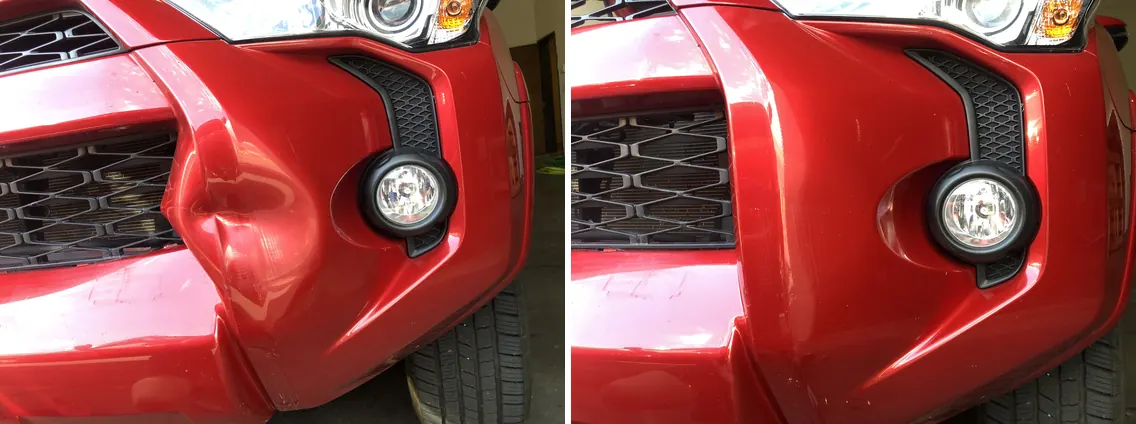
Three weeks into owning a brand new Tacoma he caught a bollard and crushed the front bumper. Every shop wanted to respray it. Factory paint is harder and more durable than anything that comes out of a spray gun, especially on a bumper that takes constant road debris. Because the damage was fresh, the plastic still held enough memory to move back into place. Came out 99% clean. A pro touched up the minor scratching that remained and you'd never know it happened.

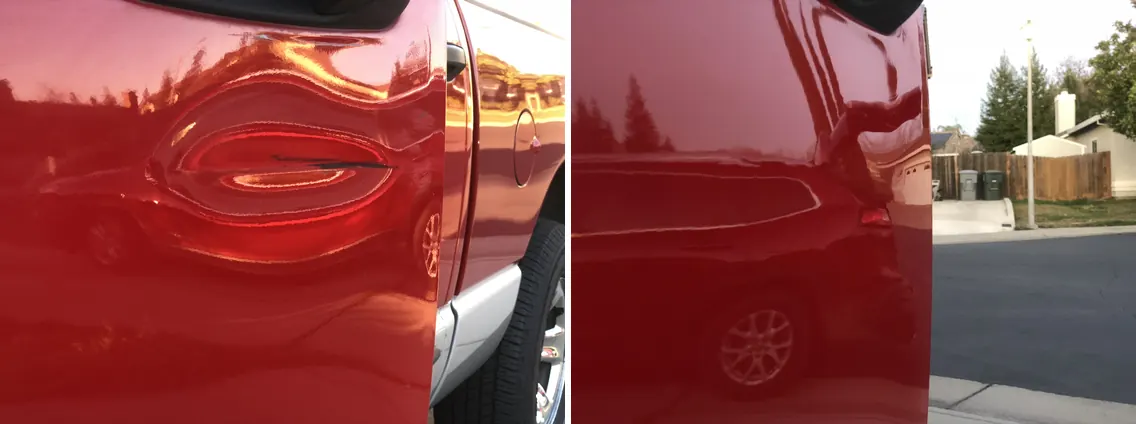
A neighbor's kid caught the door with a bicycle handlebar and left a nasty stretched crease and a deep scuff. The truck already had other dents that had been sitting ignored. Since the repair was already in the driveway, the owner turned a bad situation into something that worked in his favor and had everything taken care of at once. Nobody lost on that one.

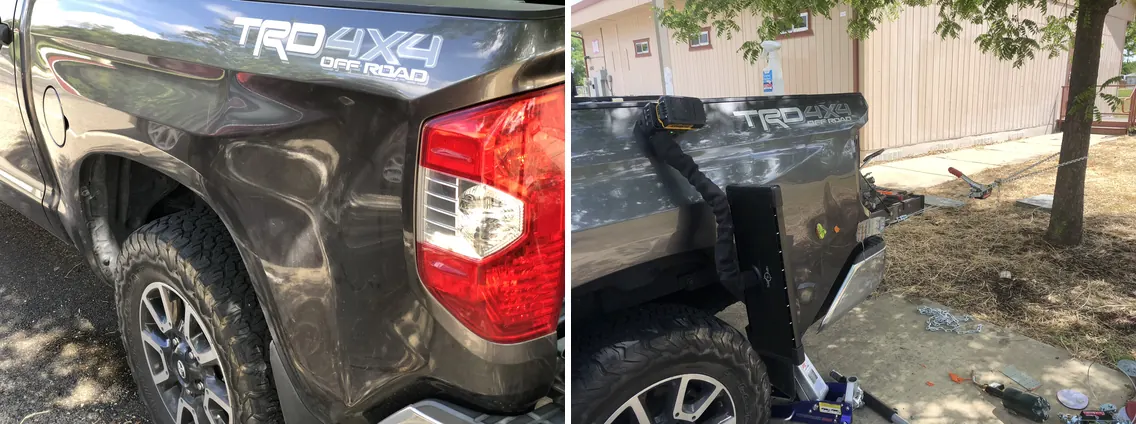
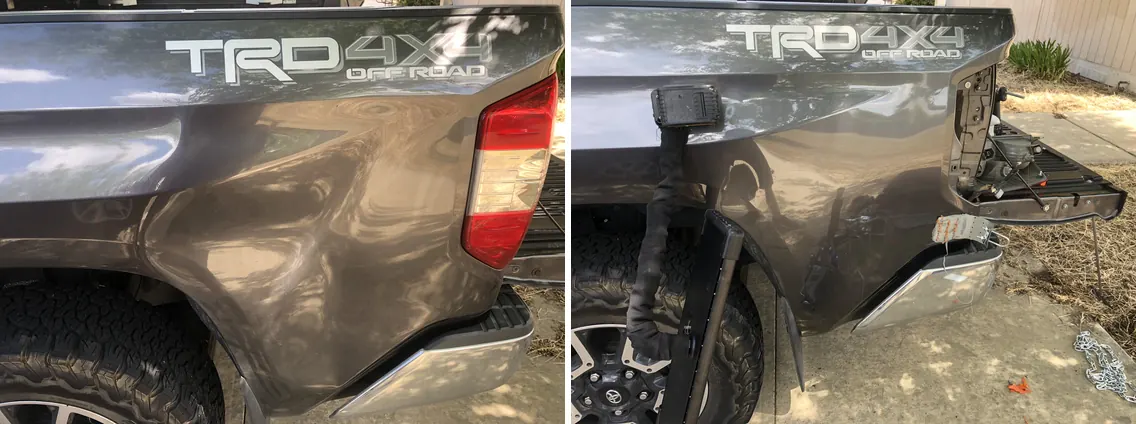
A backyard cookout, a neighbor backing into a Tundra, and a promise that an extra-large plunger would pop it right out. It didn't. What followed was the kind of panic that happens when someone genuinely doesn't know if a dent like that can be undone. The truck's owner, a middle school assistant principal, mentioned it to his dealership's service department almost as an afterthought, already resigned to a body shop bill his neighbor couldn't cover and a repaint he didn't want. That conversation is how this repair got booked instead. The fix needed more than tools alone. Working near the school, a small tree by the playground turned out to be exactly the right size to anchor a little extra tension against, the kind of leverage that makes a stubborn dent move the way it's supposed to instead of fighting back. A few hours later the keys went back. He stood there for a minute just looking at the panel, still not fully convinced it was the same truck.

The second dent on the same truck, handled the same visit while he was still standing there in disbelief over the first one.

This one belonged to a service writer at a dealership I had serviced for years. Service writers are the people who see every repair option available to their customers every single day. They kept choosing me. When this one needed work on her own car she knew exactly who to call. The automatic trunk had opened while she was pulling into a garage and left a gunshot looking stretched dent in the hatch with deep damage at the center. I measured it out so it made sense and there were no surprises, then got to work. The body shop next door, run by a friend, looked at the same damage and quoted $3,500 for the best possible repair. I repaired the hatch for a fraction of the traditional cost and left the factory paint on every panel intact. She came in already knowing what good work looked like. It still surprised her.

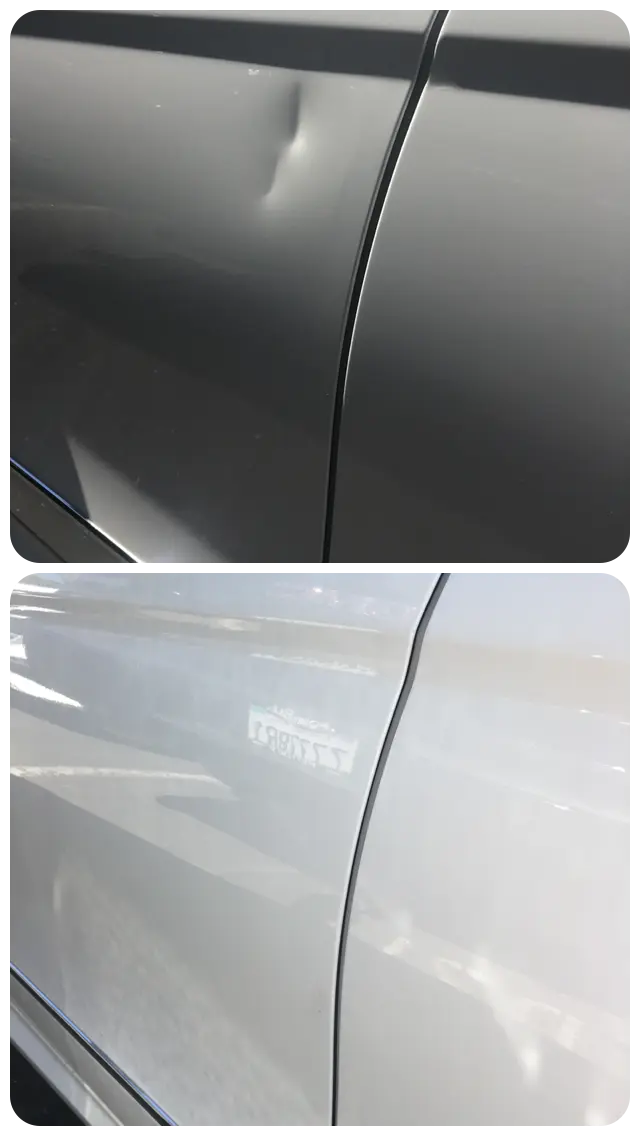
A sharp, aggressive door dent on a Mercedes sedan. Gone in one visit.

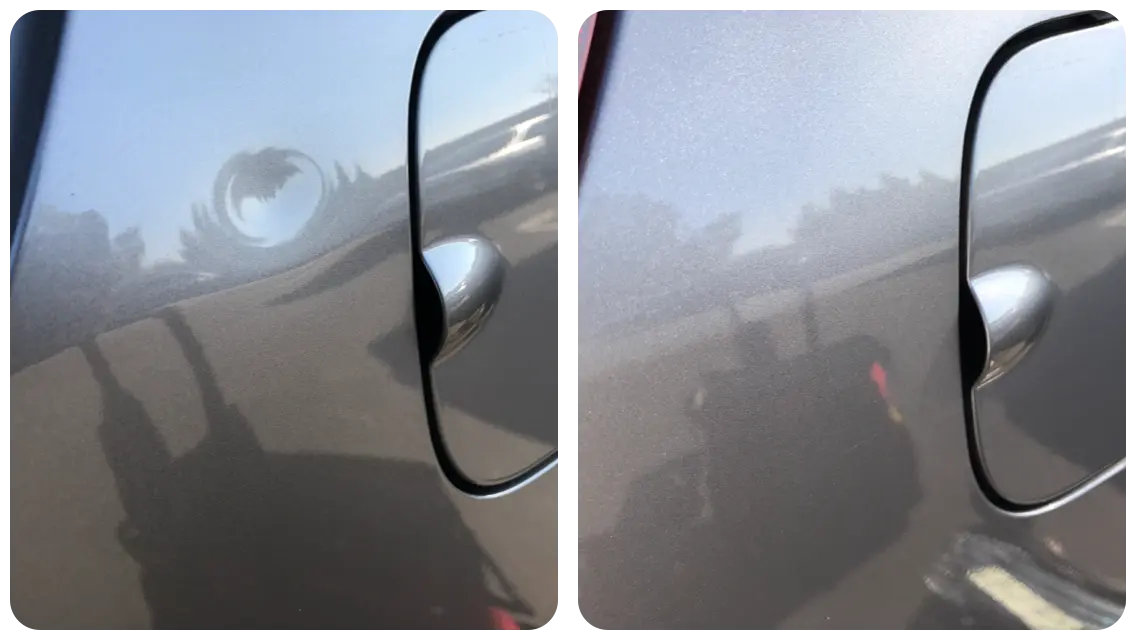
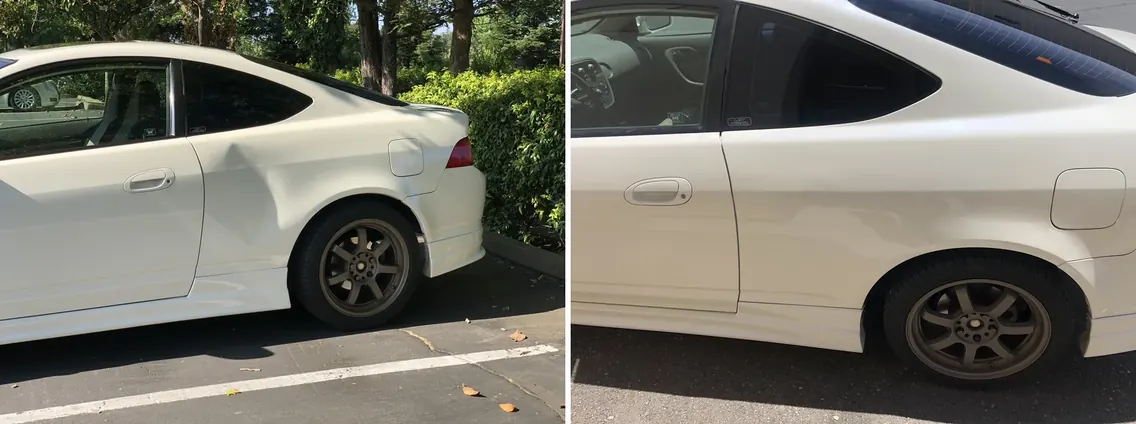
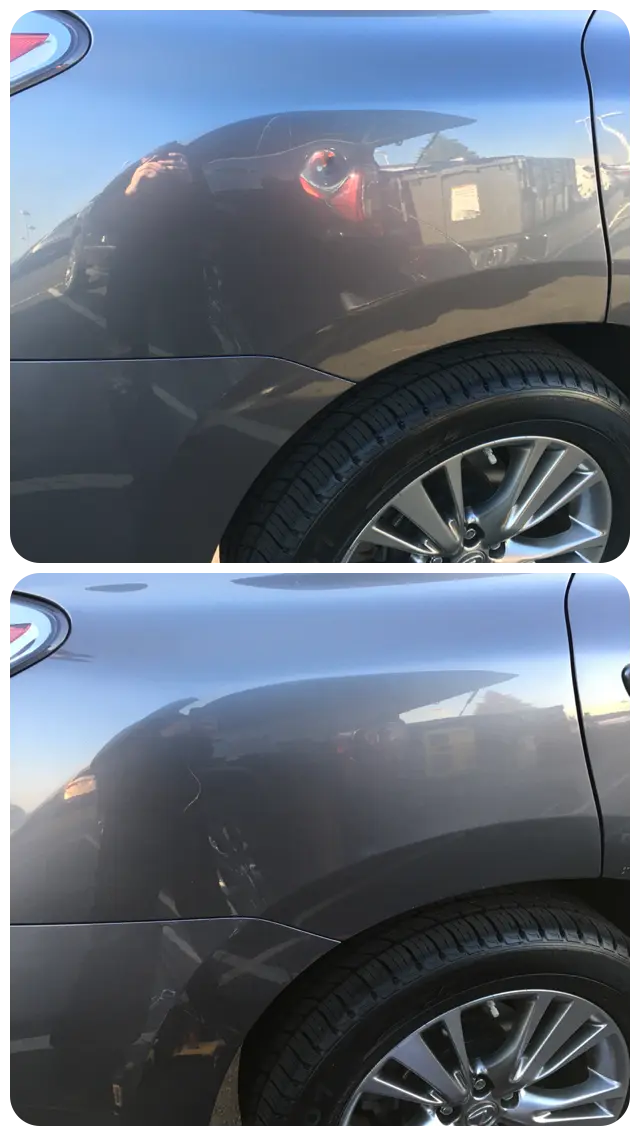
Another technician looked at this one and passed. Not because he'd have botched it, the damage was just deeper than it looked and not worth the time it would take. That's usually where a dent like this ends up: written off, lived with. Getting to it meant pulling the taillight out first, about an hour of work before the actual repair even started. Once inside, there's a lot standing in the way: the wiring harness for the lights and backup sensors, bracing, sound damper padding, and a reinforced flange glued around the cutout where the gas door sits. The owner didn't care how difficult it was. She saw that dent every single time she filled up her car, and she wanted it gone, whatever it took. It came back done right, not just done.

An auction car that showed up damaged before it ever hit the lot. The transport company denied responsibility, which left the dealer holding a repair nobody wanted to pay for. That's usually where these sit for weeks, stuck in limbo while everyone points fingers. This one didn't sit long. Fixed, sold, moved on.

A customer who started small: one little dent, nothing dramatic. That's usually how the easy calls go, the ones from people who actually take care of their car instead of waiting for it to fall apart. Then one day it wasn't small anymore. A deer strike on the freeway left a dent that had nothing in common with that first call. It came out anyway, and she kept calling back. Some of the best customers aren't the ones with the biggest jobs. They're the ones who never stopped calling.
The dent's crown sat past 135 degrees at the top, a locked-up angle that doesn't respond to shortcuts (rolling the windows up and blowing into the tailpipe does nothing, no matter what the internet says). It took a heat gun and about six hours of real technique. A broken generator meant relocating the car two miles to a lot with power, a ride back to get her own vehicle, then a return trip once the repair was done.

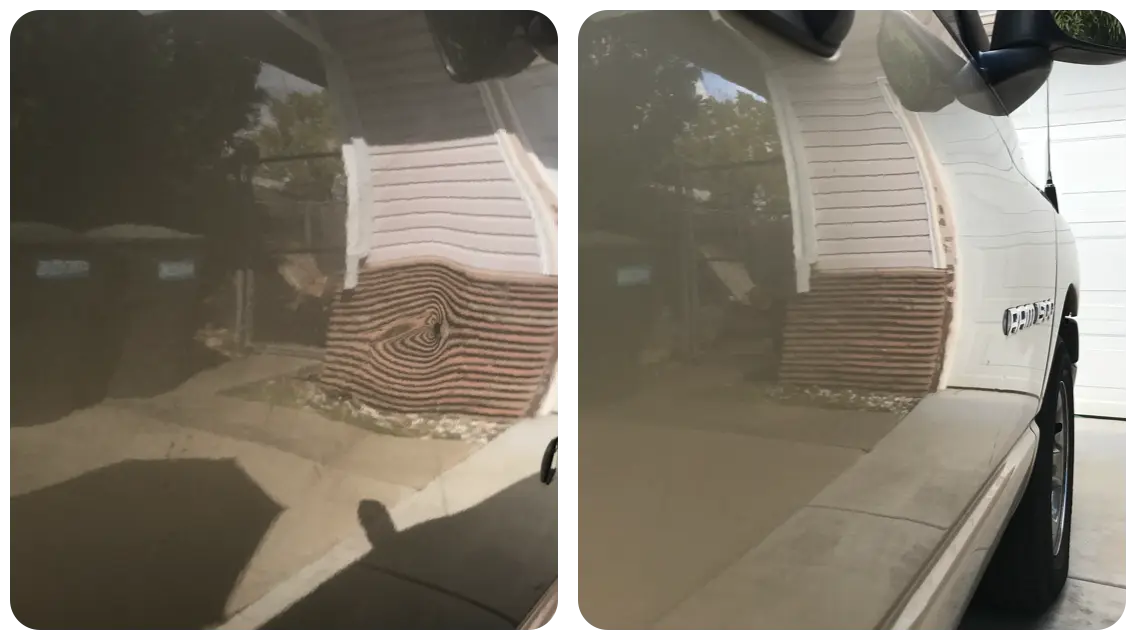
No claim. No report. No trace. Just a Dodge Ram, a trash can nobody saw coming, and this photo.

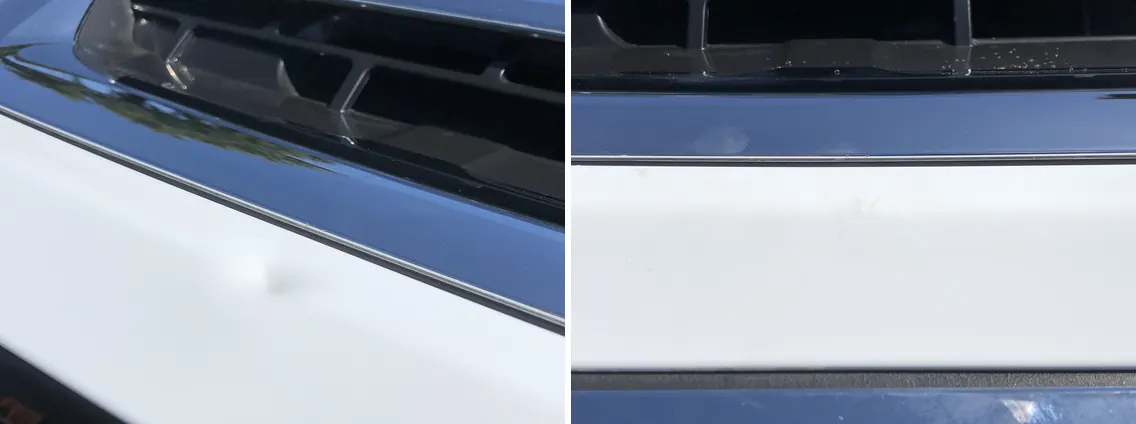
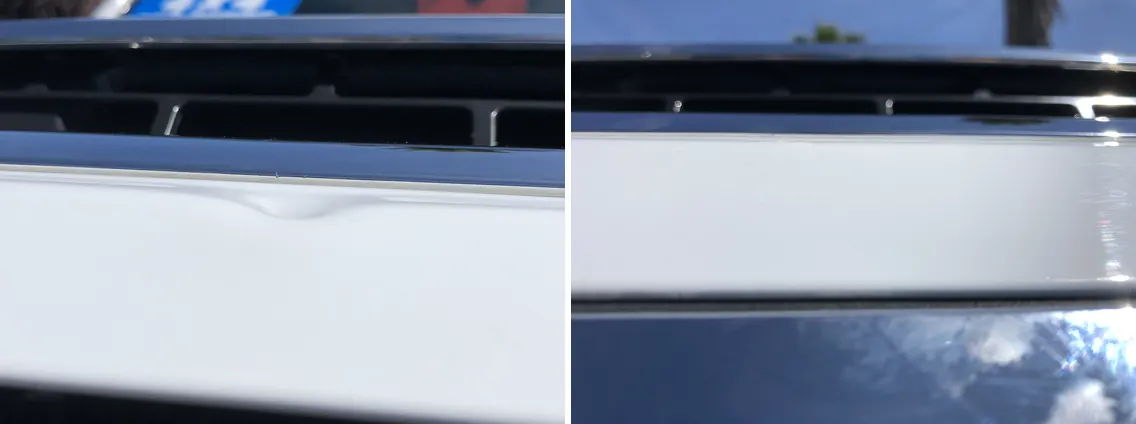
An aluminum hood combined with every imaginable factor that makes a repair almost impossible. It was so hot that day the handprints stayed sweated onto the chrome trim the whole time. Every reason to walk away from a repair was sitting in that one panel. One of the tools didn't make it through the job. The panel did.
Aluminum, painted white, on a lifted truck, repaired at 114°F, one of the hottest days Sacramento had seen in a decade. The damage sat at the panel edge near the hood latch, complicated by existing seam sealer and aluminum that had already work-hardened from the impact. Why aluminum costs more to repair →

A second dent from the same afternoon. Same truck, same brutal heat.

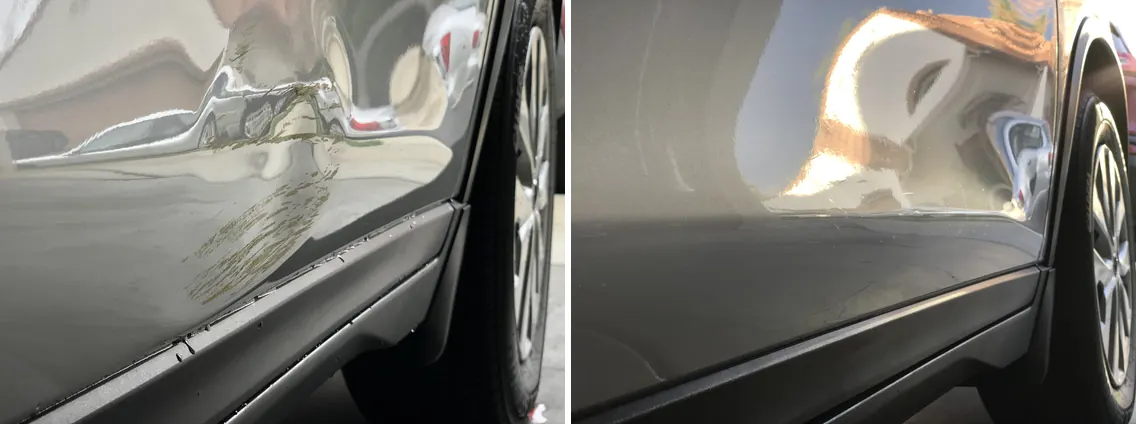
A yellow bollard at a bank, the kind of hit that usually scrapes paint straight off concrete. This one got lucky and left paint transfer instead. What you're looking at in the photo is maybe 10% of what was actually there. The damage ran the entire door, top to bottom, and none of it was uniform: crushed spots, bent bracing, high points, ridges, waves. The kind of damage most people with a normal workload turn away from without a second look. I guess I was bored that day. It came out clean.
The worst of it sat at the very bottom of the door, low enough to require crouching the entire time, with the rocker panel limiting how much room there was to move a light or a tool once the door was open. Getting real access meant about two hours of disassembly first: door panel off, carrier plate out, laminate glass pulled from the track. Only once all of that was out of the way could the actual repair start.

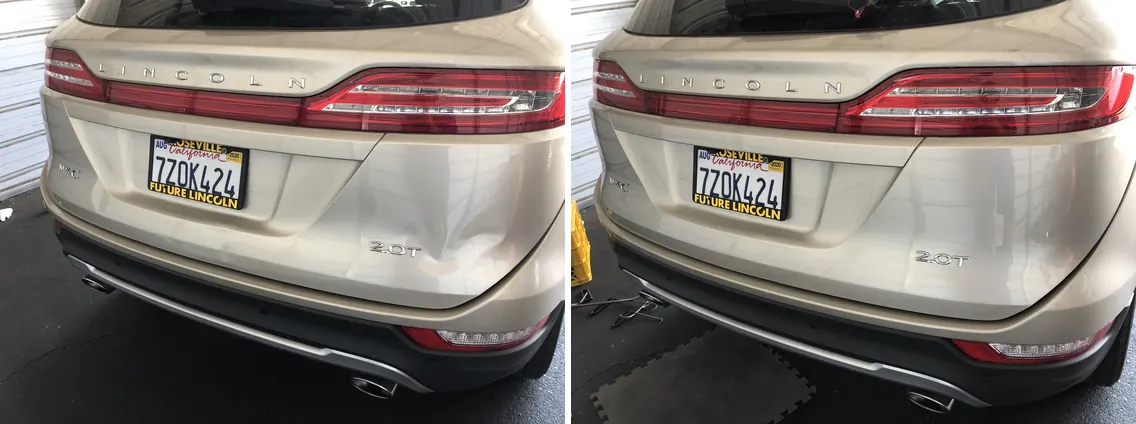
A Lincoln hauling lumber with the hatch propped open, not latched, just a foot or two up. The backup camera never showed what was actually back there. One collision later, the entire hatch was twisted end to end, aluminum, bent through and through. A replacement hatch alone runs about $2,400 in parts, plus another $300 or so in shipping, before paint, materials, or labor even enter the conversation. This one got saved instead. I bid it too low and made almost nothing on the job. Worth it for the photo. Not exactly worth it for the invoice.
Most dents show up on convex panels, the curved, outward shape most of a car's body has. Concave sections read completely differently: what looks high from one angle looks low from another, the same way your reflection warps in the bowl of a spoon. Nearly all of this damage sat in the concave part of the hatch and along the double- and triple-braced edges built in for reinforcement. Aluminum work-hardens on impact, so the panel had wrinkled with force trapped throughout it, warped and dented at the same time. Why aluminum costs more to repair →
Text photos to 865-420-3368 and get a straight answer the same day, no pressure either way.